
Why Kitchen Cabinet Hardware Deserves Special Attention
Among all cabinetry applications, kitchens place the highest demands on cabinet hardware. Kitchen cabinet doors and drawers are opened repeatedly throughout the day, making comfort, durability, and placement critical.
Well-chosen kitchen cabinet hardware improves workflow, protects cabinet finishes, and enhances the overall design. Poor choices, however, can lead to discomfort, premature wear, and visual imbalance.

What Makes Kitchen Cabinet Hardware Different?
Kitchen cabinet hardware must withstand frequent use, moisture, heat, and grease exposure. Hardware that performs well in wardrobes or living areas may fail quickly in kitchen environments.
This is why kitchens benefit most from durable materials, smooth edges, and secure mounting systems.
Cabinet Handles and Knobs: Understanding the Difference
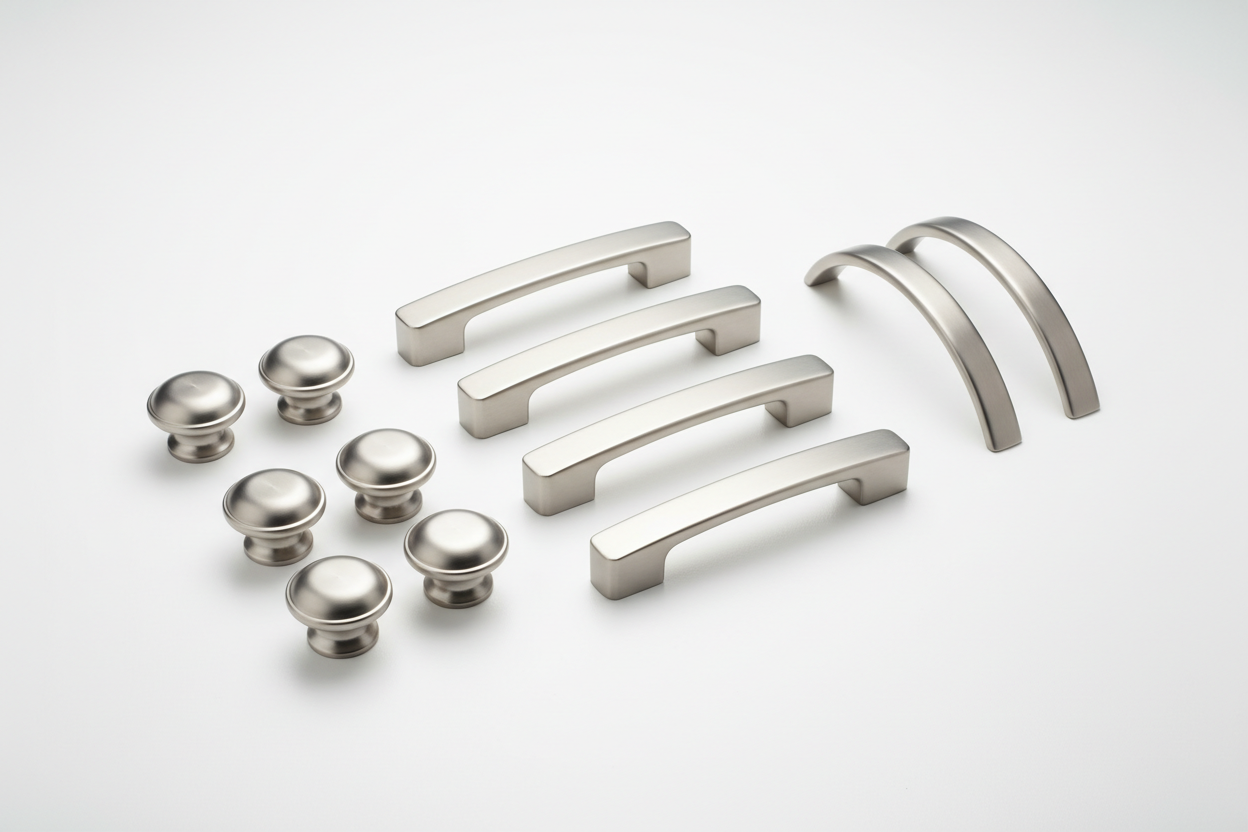
When selecting cabinet hardware, one of the first decisions is choosing between handles (pulls) and knobs.
- Handles (pulls): Offer a larger gripping surface and are ideal for drawers and wide cabinet doors
- Knobs: Compact and versatile, often used on cabinet doors in classic or transitional kitchens
In modern kitchens, handles are more commonly used due to their ergonomic advantages.
When to Use Handles in the Kitchen
Handles are particularly well-suited for drawers, where pulling force is applied horizontally. Long pulls also visually emphasize the width of drawers, reinforcing clean lines in modern kitchens.
For tall pantry cabinets or integrated appliances, vertical handles provide better leverage and easier access.
When Knobs Work Best
Knobs remain a popular choice for cabinet doors, especially in shaker-style or traditional kitchens. They offer a subtle look and require minimal visual space.
However, in high-use areas such as under-sink cabinets, larger knobs or pulls may offer better comfort.
Kitchen Cabinet Hardware Placement Basics
Correct kitchen cabinet hardware placement is essential for both function and aesthetics. Misaligned or inconsistent placement can make even high-quality cabinetry look unprofessional.
General placement guidelines include:
- Drawer pulls centered horizontally on the drawer front
- Handles placed vertically on tall cabinet doors
- Knobs or pulls positioned near the opening edge of doors
Standard Measurements for Hardware Placement
While exact placement may vary by design, consistency is key. Many kitchens follow standardized distances to ensure visual alignment across all cabinets.
For drawers, pulls are often centered vertically. For doors, hardware is typically placed 50–75 mm from the edge, depending on door size and style.
Ergonomics and User Comfort
Kitchen cabinet hardware should feel comfortable in the hand. Sharp edges, small gripping surfaces, or slippery finishes can cause discomfort over time.
Ergonomic hardware improves daily usability and reduces strain, especially for frequently used drawers and heavy cabinets.
Material and Finish Considerations for Kitchens
Materials such as stainless steel, aluminum, and zinc alloy are commonly used for kitchen cabinet hardware due to their durability and corrosion resistance.
Matte finishes help hide fingerprints, while brushed finishes offer a balance between elegance and practicality.
Matching Hardware Style with Kitchen Design
Hardware style should complement cabinet design rather than dominate it. Minimal pulls suit modern kitchens, while decorative knobs align with classic aesthetics.
Consistent hardware style across all cabinets creates a cohesive and intentional appearance.
Integrated Hardware Planning in Custom Kitchens
In custom kitchens, cabinet hardware is planned alongside cabinet structure and finishes. This ensures proper reinforcement, precise placement, and compatibility with drawer systems.
Integrated planning reduces installation issues and ensures long-term performance.
GoldenHome’s Kitchen Cabinet Hardware Approach
With extensive experience in custom cabinetry systems, goldenhome integrates kitchen cabinet hardware into complete cabinet solutions. Hardware selection, testing, and placement are considered during the design and production stages.
This approach ensures reliable operation, consistent aesthetics, and improved durability across residential and project kitchens.

Common Kitchen Hardware Mistakes to Avoid
- Mixing too many hardware styles in one kitchen
- Inconsistent placement across cabinets
- Choosing hardware that is too small for heavy drawers
- Ignoring comfort and grip quality
Conclusion: Kitchen Cabinet Hardware Is a Functional Decision
Choosing the right cabinet hardware for the kitchen goes beyond appearance. Handles, knobs, and placement directly affect comfort, efficiency, and durability.
By focusing on ergonomics, consistency, and material quality, kitchen cabinet hardware becomes a long-term asset rather than a decorative afterthought.