
The material you choose for a kitchen wardrobe will outlast virtually every other decision you make in a renovation. Paint colours change, hardware gets replaced, appliances cycle through generations — but the carcass material and door finish of a built-in wardrobe typically endures for 15 to 25 years. That longevity deserves more careful analysis than most homeowners give it.
What follows is not a catalogue of what's available. It's an assessment of what actually performs well in kitchen environments — which are uniquely hostile to many materials due to heat, humidity, grease particles, and the sustained mechanical stress of daily use.

Carcass Materials: What's Behind the Door Matters
The carcass — the structural box of the wardrobe — is rarely seen, but its material choice determines whether the entire unit remains stable and square over time. In the design of kitchen wardrobes, two materials dominate serious specification: moisture-resistant MDF and furniture-grade plywood.
MDF: The Workhorse
Moisture-resistant MDF (sometimes called MR MDF) is the standard carcass material in mid-to-high specification kitchen cabinetry for good reason. It's dimensionally stable, machines precisely, holds screws well at face grain, and accepts paint and veneer consistently across its surface. In kitchen environments where humidity fluctuates — near dishwashers, sinks, and steam from cooking — standard MDF fails; the moisture-resistant grade performs reliably when properly sealed at cut edges.
Its limitation is weight. Full-height kitchen wardrobes in MR MDF are substantial — which matters both for installation logistics and for the load-bearing capacity of wall fixings.
Furniture-Grade Plywood: The Upgrade
Birch or hardwood plywood carcasses represent a meaningful upgrade over MDF. The cross-laminated structure handles screw pull-out strength at all angles (not just face grain), which matters enormously for adjustable shelf pins and hinged door mounts. Plywood also has a better strength-to-weight ratio, and its edge grain — when exposed — reads as a considered material detail rather than something to be hidden.
The premium over MDF typically runs 20–35% on materials cost, which is worth weighing against the performance gain in high-use kitchen environments.
Door Finishes: Where Aesthetics and Durability Collide
The door finish is what the kitchen presents to the world — and it's where most material decisions are made on appearance alone, without sufficient attention to maintenance requirements or long-term performance.
Polyurethane Lacquer (Matte, Satin, Gloss)
The most versatile finish in kitchen wardrobe design. Available across the full gloss spectrum. Matte PU lacquer is currently the most popular specification in high-end residential projects — it conceals fingerprints and micro-scratches better than gloss, reads as contemporary without being trend-dependent, and cleans well with a damp cloth. High-gloss PU offers an almost mirror-like surface but shows every fingerprint and requires careful lighting to look intentional rather than cheap.
Real Wood Veneer
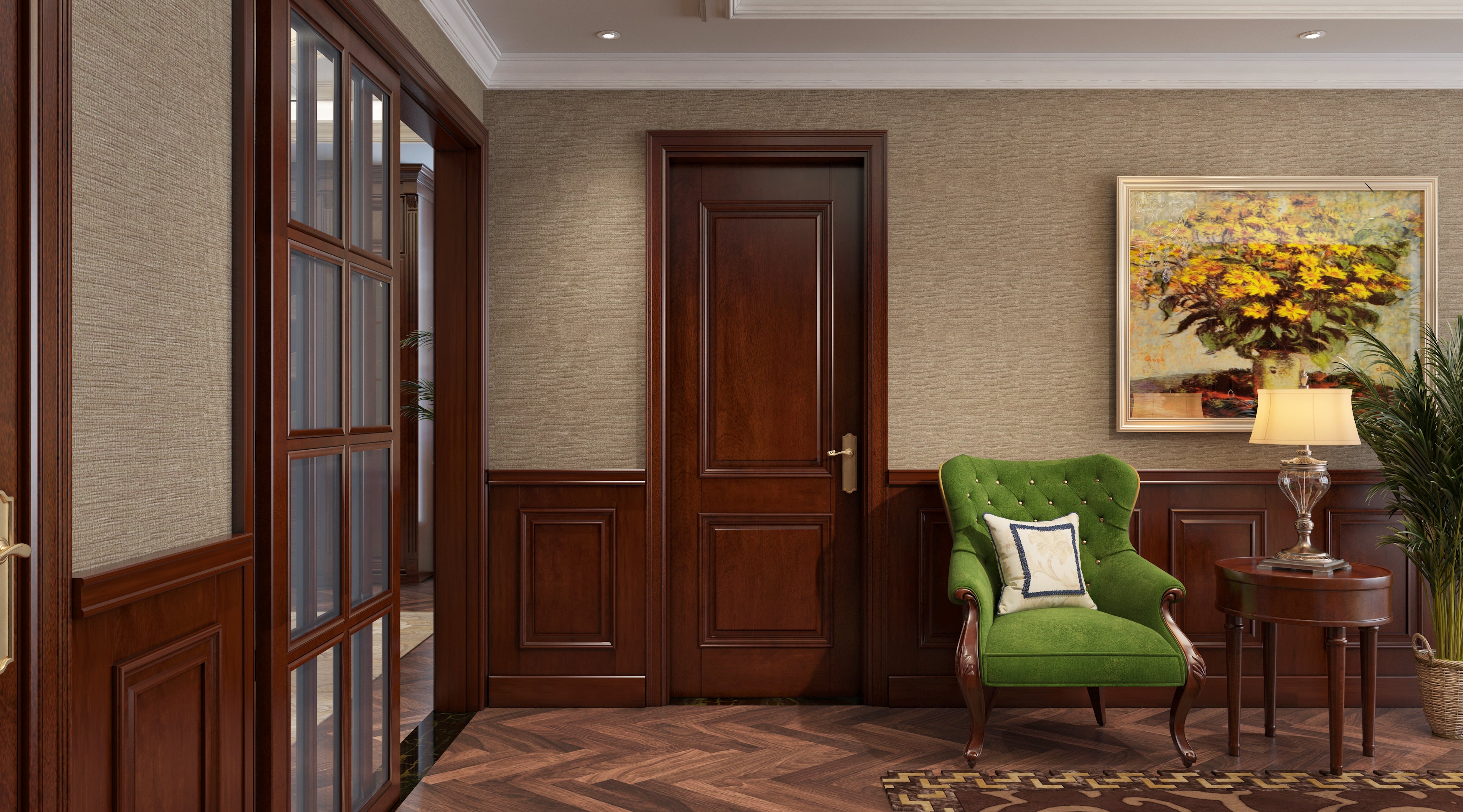
Veneer applies a thin slice of genuine timber — oak, walnut, ash, eucalyptus — to an MDF or plywood substrate. The result is authentic timber grain without the dimensional instability of solid wood in kitchen humidity conditions. Quarter-cut veneer (where the grain runs vertically) tends to perform better in kitchens than crown-cut, as it's more dimensionally stable. Properly sealed veneer will last decades and age with character rather than just aging.
Thermofoil / PVC Wrap
A vacuum-pressed vinyl film over MDF substrate. Entry-level price point, extensive colour range, fully waterproof surface. The limitation is heat sensitivity — PVC wrap near an unshielded oven or in direct sun can delaminate at edges over time. For kitchen wardrobes positioned away from heat sources, it performs adequately. For premium results, it doesn't hold up alongside lacquer or veneer in tactile or visual quality.
Solid Wood (Painted or Oiled)
Genuine solid timber frames — in oak, maple, cherry, or hardwoods — carry a craft quality that no substrate-and-finish combination fully replicates. The trade-off is cost, seasonal movement, and the need for more careful joinery to account for wood expansion. In kitchen environments, solid wood doors should be sealed thoroughly at all edges and ideally specified with frame-and-panel construction (not solid slabs) to manage movement.
The Finish Spectrum: Gloss, Matte, and What's Between
Beyond material type, the sheen level of a kitchen wardrobe finish significantly affects how the space reads. A few principles from professional specification:
- High gloss reflects light and makes small kitchens feel larger — but amplifies every imperfection in the wall surface behind and every fingerprint on the door face
- Satin (20–40% sheen) is the most forgiving finish for family kitchens — wipeable, fingerprint-resistant, and reads as quality without the high-maintenance implications of full gloss
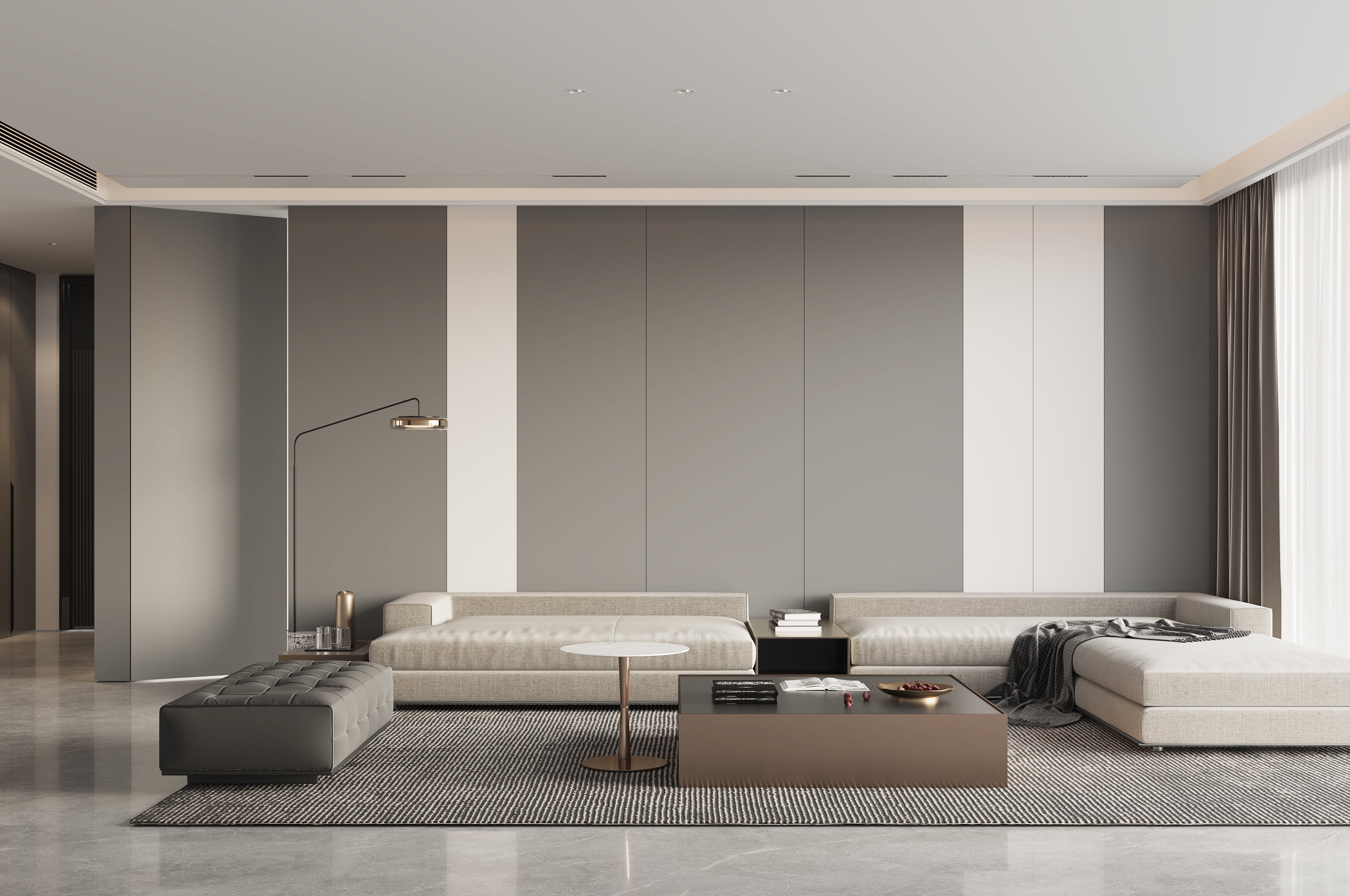
- Matte (under 10% sheen) has become strongly associated with contemporary kitchen wardrobe design and pairs naturally with natural stone and timber counters; requires a quality base coat to avoid streaking during cleaning
- Textured surfaces (fluted, ribbed, brushed) effectively diffuse light and eliminate the flat, uniform appearance of standard lacquered panels — increasingly popular as a way of differentiating the wardrobe from surrounding cabinetry
Hardware Finishes: The Detail That Anchors the Material Story
In handleless kitchen wardrobe designs, hardware is invisible — the material does the work. But where hardware is present, its finish needs to be resolved against the door material, not chosen independently.
The pairings that work consistently in practice: brushed brass with warm-toned veneers (walnut, eucalyptus); blackened steel with matte dark lacquers; polished nickel with painted white or pale grey; and unlacquered raw brass with natural stone counters for a deliberately aged, eclectic result.
The Problem With Matching Everything
A kitchen wardrobe where every metal finish is identical — hinges, pulls, tap, appliance trim — has been specified rather than designed. The best results come from a limited palette of one or two metal tones that appear in considered positions, not uniformly across every surface.

What Professionals Specify (And Why)
For high-traffic family kitchens: MR MDF or plywood carcass, satin PU lacquer doors with push-to-open mechanism, stainless steel interior fittings.
For design-forward residential projects: plywood carcass, quarter-cut oak veneer with oiled finish, integrated LED strip lighting inside, brushed brass pull hardware.
For hospitality or contract environments: phenolic resin-faced panels for carcasses, high-pressure laminate (HPL) doors — chosen for durability over aesthetics in sustained commercial use.
Manufacturers who work across these categories — like Goldenhome, whose global cabinetry operation has refined material specifications across dozens of markets over more than two decades — tend to offer more granular guidance on material performance than suppliers focused on a single product line. The difference matters when renovation decisions are expected to last twenty years.
The Material Decision in Plain Terms
For most kitchen wardrobes, the decision reduces to three honest trade-offs: budget versus durability, appearance versus maintenance, and authenticity versus practicality. There's no universally correct answer — but there is a wrong process, which is choosing finishes based on how they look in a showroom under optimized lighting, without asking how they'll look in six months under kitchen conditions.
The material that performs best is the one that was chosen with eyes open to what it requires — not just what it promises.