Why Wood Kitchen Cabinet Shelves Remain Popular
Despite the rise of metal and composite materials, wood kitchen cabinet shelves continue to be the most common choice in North American homes. Homeowners value wood for its strength, versatility, and visual consistency with cabinet interiors.
When properly designed and supported, wood shelves provide a dependable balance between durability and aesthetics.

What Are Wood Kitchen Cabinet Shelves?
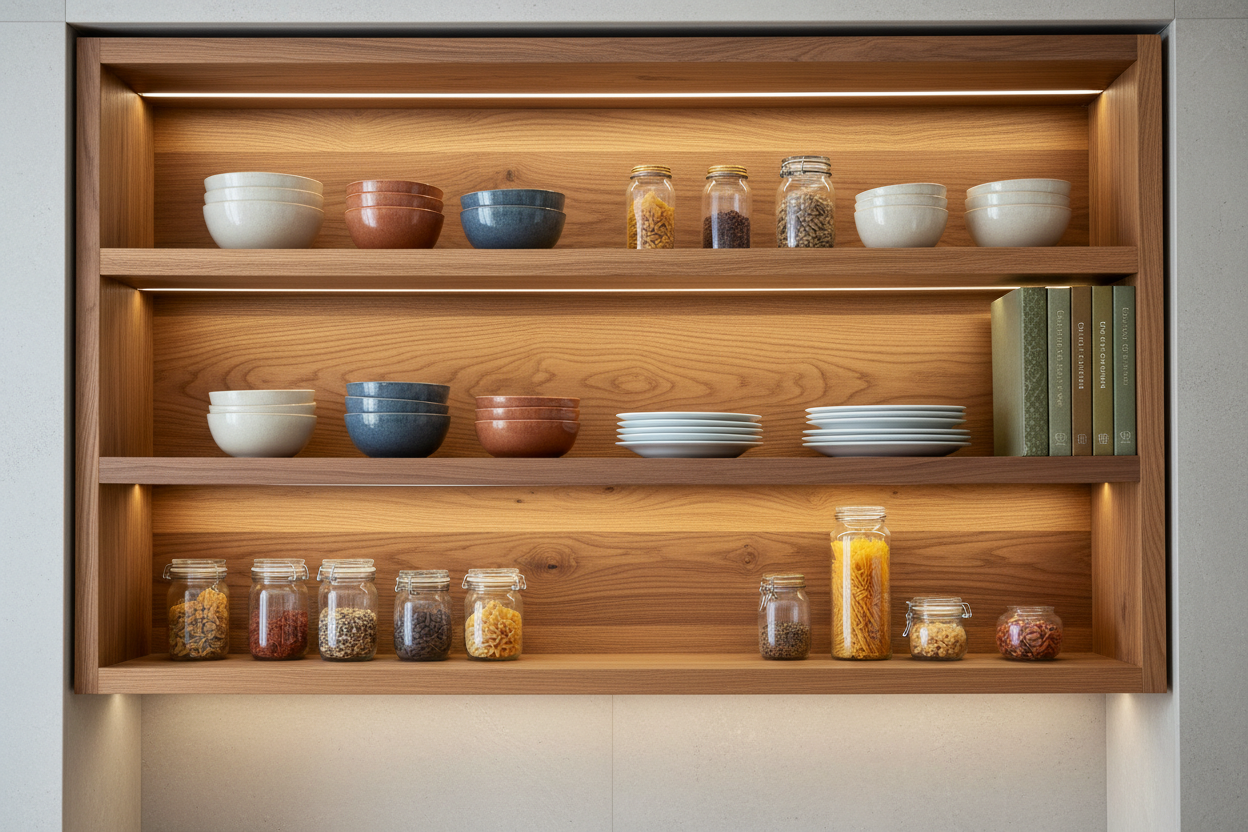
Wood cabinet shelves are shelves made from solid wood, plywood, or engineered wood panels. They are typically finished to match or complement the cabinet box.
The performance of wood shelves depends on thickness, span width, and edge reinforcement.
Strength and Load Capacity of Wood Cabinet Shelves
One of the biggest advantages of wood kitchen cabinet shelves is their ability to support everyday kitchen loads.
Common Items Stored on Wood Shelves
- Dinnerware and glassware
- Small kitchen appliances
- Pantry items and dry goods
Factors That Affect Shelf Strength
- Shelf thickness
- Material density
- Distance between supports
Wider cabinets require thicker or reinforced shelves to prevent sagging over time.
Solid Wood vs Engineered Wood Shelves
Not all wood shelves perform the same.
Solid Wood Shelves
- Natural appearance
- Good strength for moderate spans
- More sensitive to humidity changes
Engineered Wood Shelves
- More dimensionally stable
- Consistent performance across widths
- Often reinforced for added strength
In many modern kitchens, engineered wood shelves offer better long-term stability than solid wood alone.
Shelf Sagging: What Causes It and How to Prevent It
Shelf sag is a common concern with wood kitchen cabinet shelves, but it is not inevitable.
Common Causes of Sagging
- Overloading shelves
- Insufficient shelf thickness
- Wide spans without reinforcement
Ways to Reduce Sagging
- Using thicker shelf panels
- Adding front edge reinforcement
- Reducing shelf span with dividers
Wood Cabinet Shelves and Maintenance
Wood shelves are relatively easy to maintain with basic care.
Maintenance Tips
- Wipe spills promptly
- Avoid prolonged moisture exposure
- Distribute weight evenly
Proper finishes help protect shelves from stains and humidity-related issues.
Where Wood Kitchen Cabinet Shelves Work Best
Wood shelves are suitable for most cabinet applications, but some areas benefit more than others.
Ideal Applications
- Upper cabinets for dishes and glassware
- Pantry cabinets with moderate loads
- Custom cabinets with reinforced designs
Wood Shelves in Custom Cabinet Systems
In custom cabinet shelves configurations, wood shelves can be tailored to specific needs.
Shelf thickness, spacing, and reinforcement can all be adjusted to match storage habits.
Modern Kitchen Cabinet Shelves and Wood Finishes
Modern kitchens often feature wood shelves with durable finishes that resist wear while maintaining a clean appearance.
These finishes help integrate shelving seamlessly into contemporary cabinet systems.
What This Means for Resale Value
While buyers may not explicitly ask about shelf materials, they notice when cabinets feel solid and reliable.
Well-built wood kitchen cabinet shelves contribute to a perception of quality and durability.

What This Means for Distributors and Builders
For distributors and builders, wood shelves remain a practical and widely accepted choice.
Manufacturers such as GoldenHome use engineered wood shelving systems to balance strength, consistency, and production efficiency across cabinet lines.
How Homeowners Should Decide
Homeowners choosing wood cabinet shelves should consider:
- Expected load and usage
- Cabinet width and shelf span
- Environmental conditions such as humidity
Final Thoughts
Wood kitchen cabinet shelves continue to be a reliable solution for everyday kitchen storage. When properly designed and supported, they deliver strength, stability, and visual consistency.
For most North American kitchens, wood shelves offer a practical balance between durability and design—making them a dependable long-term choice.