Why People Confuse Cabinet Makers and Cabinet Manufacturers
When planning a kitchen or home renovation, many people use the terms cabinet maker and cabinet manufacturer interchangeably. While both are involved in producing cabinets, their roles, processes, and suitability for different projects vary significantly.
Understanding the difference between a cabinet maker and a cabinet manufacturer helps homeowners and professionals make better decisions regarding quality, customization, and long-term value.

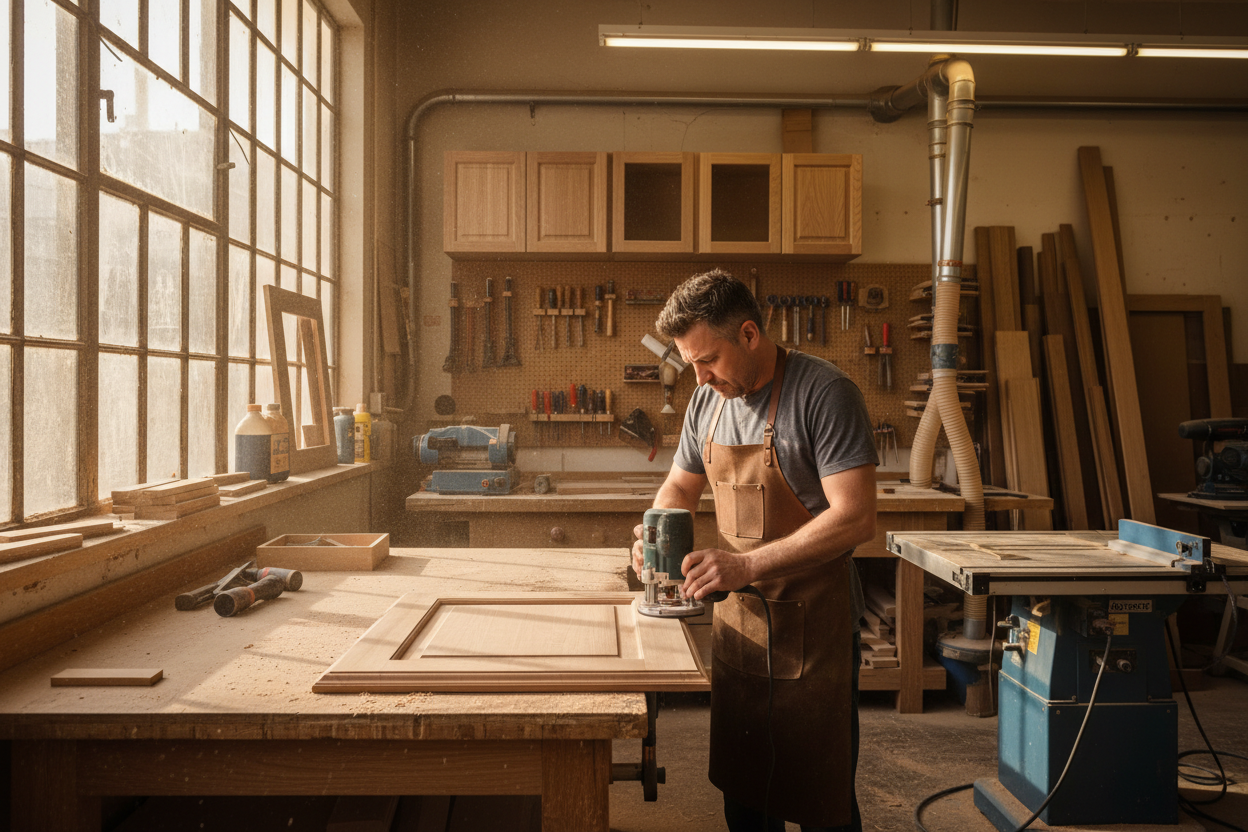
What Is a Cabinet Maker?
A cabinet maker typically focuses on creating cabinets tailored to specific spaces and individual requirements. Cabinet makers emphasize craftsmanship, precision, and flexibility.
Key characteristics of a cabinet maker include:
- Custom or semi-custom cabinet designs
- Adaptation to unique layouts and measurements
- Strong focus on craftsmanship and detail
Cabinet makers are often involved closely with designers, homeowners, or contractors throughout the project.
What Is a Cabinet Manufacturer?
A cabinet manufacturer produces cabinets at scale using standardized systems and industrial production processes. Manufacturers focus on consistency, efficiency, and volume.
Typical characteristics of cabinet manufacturers include:
- Standardized cabinet sizes and configurations
- High production capacity for large projects
- Streamlined installation and logistics
Manufacturers are commonly used in large residential developments and commercial projects.
Customization: Flexibility vs Standardization
Customization is one of the most important differences between cabinet makers and manufacturers.
- Cabinet makers: Offer high flexibility, adapting designs to irregular walls, custom layouts, and specific storage needs.
- Cabinet manufacturers: Offer limited customization within predefined systems to maintain production efficiency.
For unique homes or renovation projects, cabinet makers often provide better fit and design freedom.
Quality and Craftsmanship Comparison
Quality depends on both materials and execution. Cabinet makers typically emphasize handcrafted detail, while manufacturers prioritize consistency.
Well-established manufacturers, however, can deliver excellent quality through advanced machinery and strict quality control.
The difference lies in approach:
- Cabinet makers focus on individual craftsmanship
- Manufacturers focus on system-level precision
Cost and Project Scale Considerations
Cost structures differ significantly between cabinet makers and manufacturers.
- Cabinet makers: Higher cost per unit, suitable for custom homes and renovations
- Cabinet manufacturers: Lower cost per unit at scale, ideal for multi-unit developments
Choosing the right option depends on project size, budget, and customization needs.
Which Option Is Better for Residential Projects?
For single-family homes, renovations, or high-end residences, a custom cabinet maker often delivers better design alignment and storage efficiency.
For large residential developments, manufacturers provide scalability, predictable costs, and consistent delivery schedules.
The Hybrid Approach: Craftsmanship Meets Manufacturing
Modern cabinetry increasingly combines the strengths of both approaches. Some companies integrate cabinet making expertise with large-scale manufacturing systems.
Manufacturers such as goldenhome operate with a hybrid model — delivering custom cabinetry solutions supported by industrial precision, consistent quality control, and scalable production capacity.
This approach bridges the gap between flexibility and efficiency.

How to Choose Between a Cabinet Maker and a Manufacturer
The right choice depends on your project goals:
- Choose a cabinet maker if customization, unique layouts, and design detail are priorities.
- Choose a cabinet manufacturer if scale, consistency, and efficiency are more important.
In some cases, a hybrid solution offers the best of both worlds.
Cabinet Maker vs Cabinet Manufacturer: Final Thoughts
There is no universal winner in the debate between cabinet makers and cabinet manufacturers. Each serves different needs and project types.
Understanding the differences allows homeowners, designers, and developers to align their cabinetry choice with budget, timeline, and design expectations.
By selecting the right partner, cabinetry becomes not just a functional element, but a long-term investment in quality and usability.